
Mathew Gallagher
February 24, 2025
Happy February – and Happy Black History Month!
Throughout history, African Americans have made profound and amazing contributions to society that often get overlooked like a Van Gogh in the middle of a garage sale in Minnesota.
We’re talking the cell phone, the traffic light, hell, even the eradication of smallpox (which first began from the folk remedy of a slave). Like volcanic magma forged in the fires of a racist history, Black people have shaped and changed our world with monumental achievements all the more extraordinary when you consider the racism they were up against.
So let’s celebrate Black history and its contributions to our world and culture. That’s Black with a capital B, which according to AP style, designates a people “who have strong historical and cultural commonalities, even if they are from different parts of the world and even if they now live in different parts of the world.” Black is identity and essence, forged by fire into strength and the magma of magnitude. Black is beautiful are the Kings and Queens who created the very cradle that rocks our civilization.
How Did Black History Month Begin?
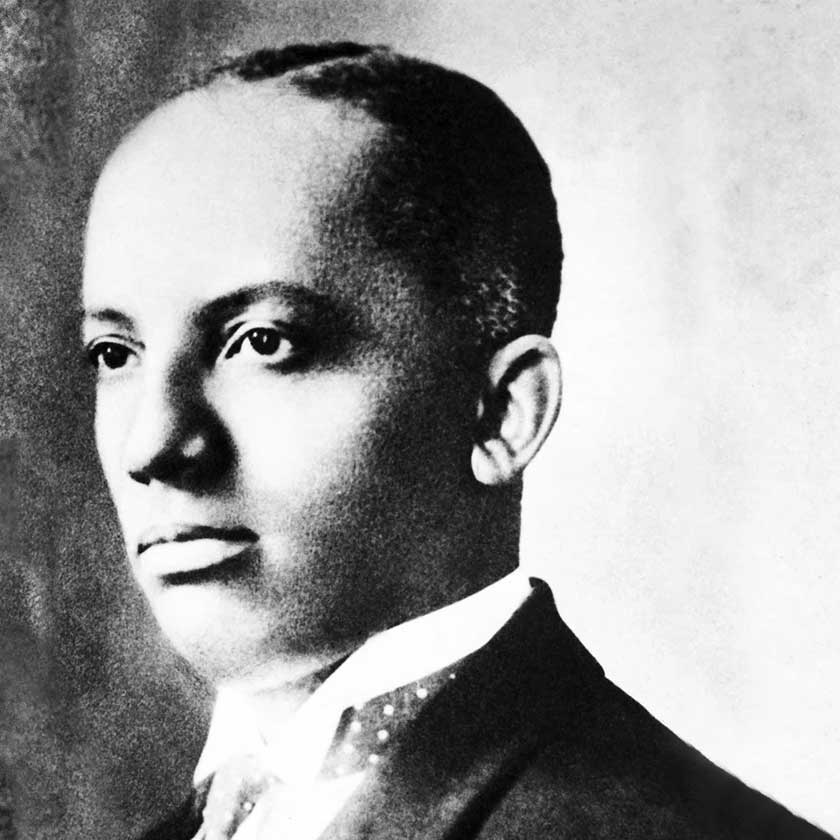
Black history first began being celebrated and recognized by Black historian Carter G. Woodson and other intellectuals who gathered at a national celebration of the 50th anniversary of emancipation in Chicago in 1915. The fair featured exhibits highlighting the progress Black people had made since the destruction of slavery. Woodson published The Journal of Negro History in 1916, and as early as 1920 began urging Black civic organizations to promote the historical Black achievements researchers were discovering.
They went on to start the creation of Negro History and Literature Week in 1924, later called Negro Achievement Week, and then in 1926, renamed Negro History Week, to take place a week in February to commemorate the birthdays of Abraham Lincoln and Frederick Douglass. As early as the 1940s, Blacks in West Virginia began celebrating all of February as Black History Month, and various states and cities gradually got on board throughout the 1960s.
Black History Month became nationally recognized first by President Ford in 1976, and every president since has made a February proclamation to celebrate Black History Month.
Black History Month is not only an American tradition but a global recognition. While not always in February, a month designating Black History is celebrated in the UK, Germany, Canada, Ireland, France, and in seven countries in Africa.
To kick off your celebration, here are a few noteworthy African American achievements that have shaped our world with beauty, technology, and science.
Racist Crackers Thought First African American Poet Was a Whitey not a Wheatley
Philis Wheatley was the first African American to publish a book of poetry, Poems on Various Subjects, Religious and Moral, in 1773, which she wrote as a slave (she was emancipated soon after its publication).
The Pizzagate conspiracy theory of the day alleged her poetry was actually written by a white man, since the ideas were too great and the words too beautiful to have been written by a Black woman. Wheatley had to testify in court to a bunch of racist crackers who couldn’t believe Black women wrote poetry. Poet Nikki Giovanni’s appearance on the Blackalicious album NIA would have blown their minds, but not the same way it blows ours.
Rappers Delight in the First Hip Hop Hit Record Thanks to a Black Woman

Speaking of hip-hop, singer and music producer Sylvia Robinson produced the first-ever commercially successful rap record. Billboard magazine dubbed her “Hip-Hop’s First Godmother.” She conceived and produced the first successful rap record, “Rappers’ Delight,” by the Sugarhill Gang in the summer of 1979, “the first rap single to conquer the radio and the charts — topping Billboard’s R&B tally and reaching No. 37 on the Hot 100 — but the first to sell over a million.” Along with her husband, Robinson co-owned the first hip-hop label, Sugar Hill Records.
The Technology That Created Your Cell Phone Was Invented by a Black Man
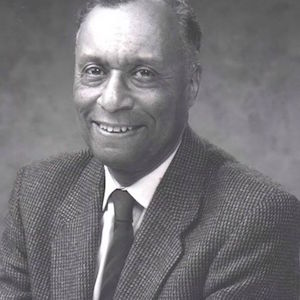
African American inventor Henry T. Sampson created the world’s first cell phone. Along with George H. Miley, Sampson was awarded a patent in 1971 for a gamma-electrical cell that made portable cell phones possible. The device used radio waves to transmit and receive audio signals. Motorola engineer Marty Cooper used Sampson’s technology to place the first public call from a real handheld portable cell phone on April 3, 1973.
Sampson was also the first African American student to earn a Ph.D. in Nuclear Engineering in the United States, from the University of Illinois Urbana-Champaign in 1967.
Inventor of the Gas Mask and the Traffic Light Was Black
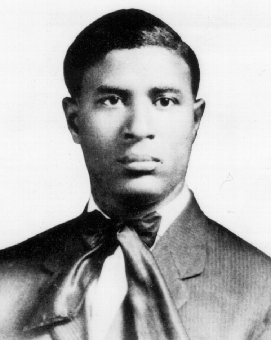
The son of freed slaves, Black inventor Garrett Morgan was the first to patent the gas mask, which was first used to rescue tunnel workers trapped in an underground tunnel in Lake Erie in 1916. A natural gas pocket had exploded, trapping workers. Morgan rode to the scene and offered his gas masks to rescuers, who were able to get the workers safely out. Morgan had marketed the device through a demonstration with a white actor who posed as the mask’s inventor to circumvent racism. The Cleveland Police Department had learned of Morgan’s gas masks through those demonstrations.
The gas mask wasn’t Morgan’s only contribution to our modern world. Four years later, Morgan went onto invent the three-way traffic signal after witnessing a horrific accident between an automobile and a horse-drawn cart at an intersection. Until then, traffic signals only had two settings – stop and go. “My grandfather’s great improvement was the ‘all hold’—what is now the amber light,” his granddaughter Sandra Morgan said. He sold the patent to General Electric, which spread the technology.
A Slave’s Folk Remedy Led to the Inoculation of Small Pox
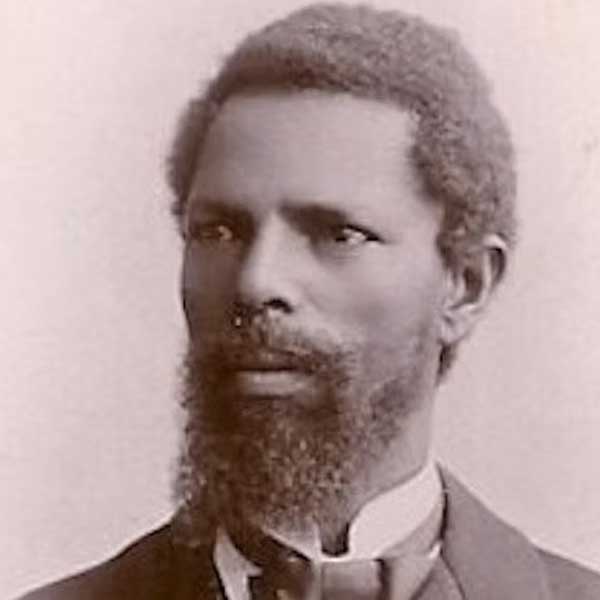
The inoculation of smallpox was first developed by a slave named Onesimus in the early 1700s. He told his owner, Cotton Mather (of Salem Witch Trials renown and also a racist cracker who had least had enough sense to listen to his slave) about a folk remedy where he protected himself against smallpox by rubbing the puss of someone infected into a wound in order to gain immunity. This activated the body’s immune response into an inoculation.
Mather tested the method during a smallpox epidemic in Boston that wiped out 844 – 14% of the population. Mather inoculated 242 Bostonians using Onesimus’s method, and only six died, or about one in 40, as opposed to one in seven deaths among the population of Boston who didn’t undergo the procedure.
Onesimus’ method saved hundreds of lives—and led to the eventual eradication of smallpox.
Carry Seeds, Drop Them on Fertile Ground
We owe the world we live to the contributions of Black folks, amazing achievements made in a country whose Constitution legally counted them as 3/5s of a person in the dawn of its time.
In her poem “BLK History Month,” Nikki Giovanni said it best:
“If Black History Month is not
viable then wind does not
carry the seeds and drop them
on fertile ground
rain does not
dampen the land
and encourage the seeds
to root
sun does not
warm the earth
and kiss the seedlings
and tell them plain:
You’re As Good As Anybody Else
You’ve Got A Place Here, Too”

Written by
A freelance writer for hire, Matt Gallagher is the face and voice behind Web Copy Magician. He enjoys Bear Blend as a tea to spiritually reconnect with nature and the therapeutic wonders of chlorophyll.
Read more from Mathew Gallagher
2 comments
Jazz
1 year ago
Really appreciate the history lesson, great products also.
Hrt
1 year ago
Nice!
Leave a comment